

In the times when businesses are competing for attention in social media, there’s a growing need for social media analytics.
With billions of users and a huge number of companies aiming to promote their businesses effectively, achieving visibility in social media is harder than ever. Here comes a social media analytics tool which can help you to understand your social media performance and to improve your outcomes.
A social media analytics tool is usually a web application that uses a graphical analytics dashboard and charts to visualize social media performance data and to give users a better understanding of their social media activity. The data in such a tool is gathered from various social media sites, analyzing data from each social media account to provide detailed insights, including major social media networks like Facebook and Instagram, via their official APIs. Additionally, integrating Google Analytics with social media analytics tools allows for a comprehensive analysis of website traffic, helping marketers understand the impact of social media on website performance, including traffic sources and conversions.
A well-designed analytical tool has an intuitive interface and it gives insightful data about key social media metrics. Most commonly, it sums up organic and paid social media activity across multiple social media accounts. It is mostly used by marketers, marketing agencies, media houses, social media professionals, or small businesses that run social media on their own.
Why should you use social media analytics tools?
- First of all, social media should be an important part of your marketing strategy. And every strategy needs to be well-thought and most preferably based on data. Social media analytics tools deliver a wide range of data regarding your social media activity.
- An in-depth social media insight helps you to better understand your target audience, your audience behaviors and preferences.
- With an access to social media tools you can easily identify social media trends and successful practices amongst your audience.
What is a social media analytics tool?
Definition and purpose
A social media analytics tool is a software application designed to monitor, evaluate, and improve social media performance. These tools tap into social media metrics and performance metrics, ranging from likes and shares to comments, clicks, engagement, reach, and competitive benchmarking insights, and translate this data into meaningful insights. The primary purpose of a social media analytics tool is to provide a clear picture of what’s working, what’s not, and where the brand stands in the digital landscape. By using a social media analytics tool, businesses can track social media growth, create automated reports, and make data-driven decisions to optimize their social media strategies, helping refine social strategies based on performance metrics and data.
What can you measure in a social media analytics tool?
Social media analytics tools provide a wide range of essential metrics that can help to better understand your social media activity, but also your target audience. These tools assist in managing and analyzing multiple social media accounts across various platforms, and the range of supported social media platforms is crucial for comprehensive analysis. They also enable you to evaluate your overall social media efforts. We’re going to bring them closer on the example of Sotrender and its newest module, Sotrender Ads
Analyzing organic results
In the Sotrender app, you can track lots of useful data, starting from basic insights and including performance across different social media channels.
Profile overview and key output data
When analyzing your social media presence, you might need to start off with some basic data that gives you a general idea of your social media results. You can check for example:
- number of fans and how is it changing over time, allowing you to track follower growth,
- reach (organic, viral and paid) with peak values on particular dates,
- total engagement with the Interactivity Index (which is a sum of weighted activities on a Facebook page over time), with post engagement being a key metric for evaluating content success,
- consumptions over time (link clicks, photo view, video play),
- user reactions and top performing posts by sum of activities, including analysis of audience comments to gauge sentiment.
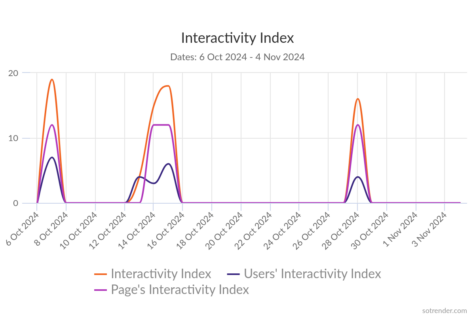
Interactivity Index (INI) is Sotrender’s authorial metric which is not available in other social media analytics apps.
Getting insights about your audience
Social media analytics tool helps to better understand your audience which, apart from social media context, comes handy when preparing your marketing strategy and aiming to address your product most accurately.
Here are some of the target audience useful insights:
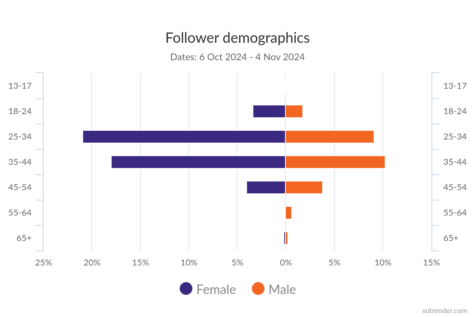
- fan and reach demographics,
- fan segmentation by country,
- top countries, cities and languages of your audience,
- active users on particular days and hours.
Analyzing reach & engagement
Reach and engagement are one of the most important metrics as they reflect the effectiveness of social media activities. Within this section you can check and analyze among others:
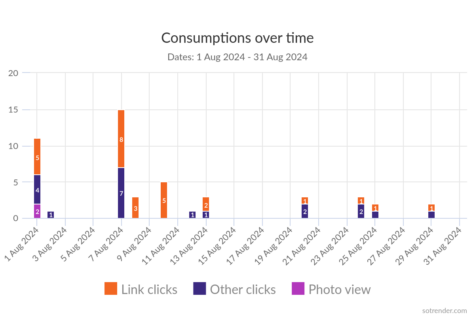
- reach, impressions and consumptions over time,
- user activities and reactions,
- frequency which is the average number of times your page content was shown to one user,
- user activities and reactions to the content that you share,
- response rate and time.
Evaluating content strategy
Content strategy is a very important part of social media marketing. Thanks to a social media analytics tool, you can see what types of content formats that you use in your content strategy are the most successful. You can check for example:
- how particular social media content posts performed during a selected time period and which of them turned out to be the most engaging,
- what were the most popular post types that you used,
- how did users interact with the social media content that you created.
Analyzing paid results
Social media analytics software can be even more useful when it comes to analyzing paid results. These tools help monitor and improve social media performance through paid campaigns by tracking key metrics and ensuring that your investment pays off. Using ads analytics, you can perform detailed analysis of your paid campaigns. If it doesn’t, having access to additional data can help you to implement necessary changes and optimize your results.
In Sotrender Ads, designed to track and analyze paid social media performance, you can:
- track the most important KPIs (Key Performance Indicators) over selected time periods, e.g. CPC or CPM,
- compare ads, ad sets and campaigns between each other to see which of your ads are most successful,
- analyze your social media campaign results in real time to make more informed and accurate decisions (whether to invest more in a particular campaign or allocate your budget for some other advertisement),
- generate comprehensive pptx custom reports with the most important data to sum up each campaign’s advertising spends on social media.
By analyzing campaign data with these tools, you can extract insights that help optimize future campaigns and improve overall performance.

Measuring reach
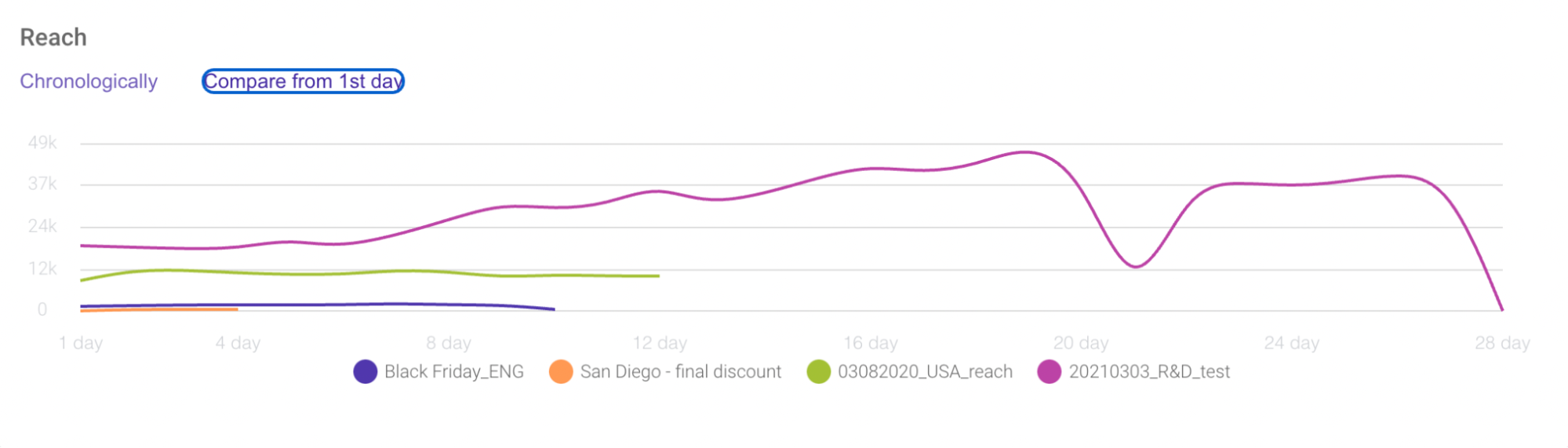
Reach is one of the key metrics especially if you choose it as your campaign main goal. In Sotrender Ads, you can compare the reach of your particular campaigns over time to see which of them were seen by the biggest number of people. You can also check how the reach was correlated with your campaign spends.
Tracking conversion
Conversion metrics are the most evident results of your campaign. You can clearly see how many users performed an expected action, which can be for example submitting a contact form, making a purchase, signing up for a subscription etc. If you correlate conversion to your spend, you will get a clear idea of your ROI (Return on Investment).
Traffic measurement
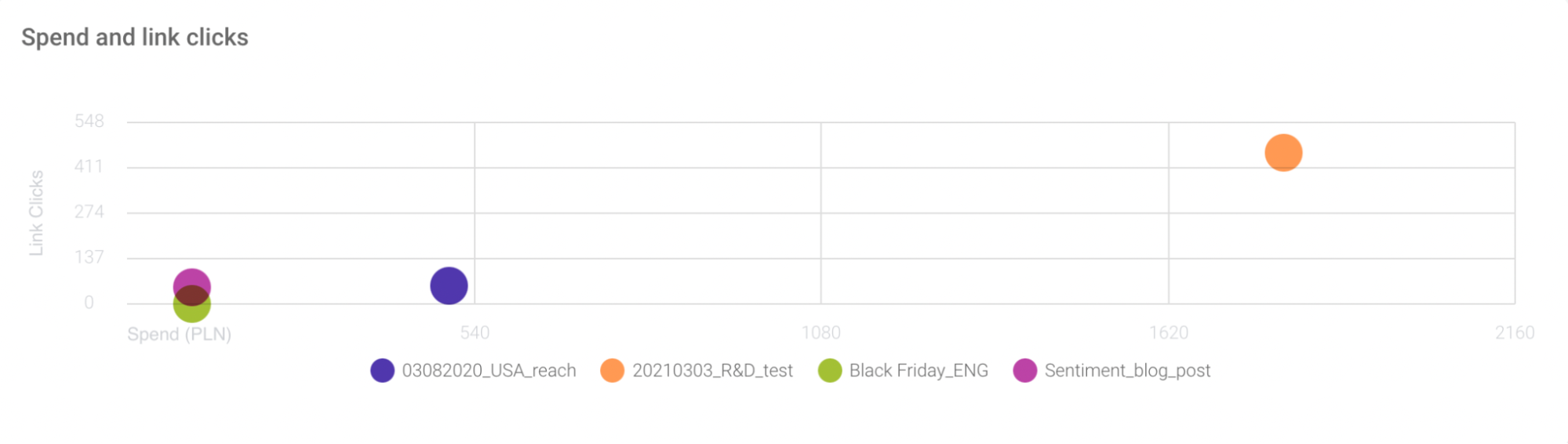
Traffic is an essential KPI, especially if you decide to focus your marketing efforts on directing your audience to a specific landing page, a blog post, an app and more. In Sotrender Ads, you can measure link clicks with relation to your expenses so that you can learn about your campaign profitability.
Understanding user engagement
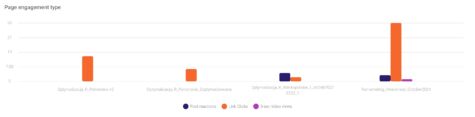
Another important metric is engagement. You can check how many users interacted with particular campaigns and what type of content was the most engaging for them. It helps to improve your advertising strategy and choose the content format that seems the most relevant.
Key features of social media analytics tools
Common features
Social media analytics tools typically offer a range of features to help businesses analyze and improve their social media performance. Some common features include:
- Unified Platform: A single analytics dashboard to track performance across multiple social media platforms, providing a visual overview of key metrics and insights.
- Comprehensive Analytics: Detailed insights into engagement, audience demographics, and content performance.
- Real-time Monitoring: Live updates on trending topics, brand mentions, and audience sentiments.
- Competitor Analysis: Benchmarking performance against industry competitors.
- Customizable Reporting: Tailored reports with advanced reporting features and robust reporting capabilities to meet specific business needs.
- Integration Capabilities: Seamless integration with other marketing tools and platforms.
- AI-powered Insights: Advanced analytics and predictive modeling to enhance decision-making.
- Ease of Use: Intuitive interfaces and user-friendly dashboards.
- Collaboration Features: Tools for team communication, task assignment, and workflow management.
- Reporting Tool: Use of a reporting tool for creating, customizing, and automating reports, making it easy to share insights and performance data with stakeholders.
Advanced features of social media analytics tools
Modern social media analytics tools go far beyond basic metrics, offering advanced features that empower businesses to gain deeper insights into their social media performance. One of the most powerful capabilities is sentiment analysis, which helps you understand how your audience feels about your brand, products, or campaigns by analyzing the tone of comments, mentions, and conversations across multiple social media platforms. This allows you to quickly identify positive feedback, address negative sentiment, and tailor your messaging for maximum impact.
Competitor analysis is another essential feature, enabling you to track your competitors’ social media strategies, benchmark your performance, and uncover opportunities to stand out in your industry. With advanced social media analytics, you can monitor competitor growth, engagement, and content trends, helping you stay ahead of the curve.
Influencer analytics is invaluable for identifying and evaluating potential influencer partners. These analytics tools assess influencer reach, engagement, and audience alignment, ensuring you collaborate with individuals who truly resonate with your target audience.
Other advanced features include predictive analytics, which forecast emerging trends and help you adjust your social media strategy proactively, and social media monitoring—tracking brand mentions, keywords, and hashtags across various social media platforms in real time. Social listening takes this a step further by analyzing conversations about your brand and industry, providing deeper insights into customer needs and market shifts.
By leveraging these advanced features, businesses can extract actionable insights, refine their social media strategies, and achieve better results across multiple social media channels.
Why is it worth using social media analytics tools?
Social media analytics tools are commonly used by marketers, social media marketers, and marketing agencies, including social media agencies. These tools enhance social media management by providing comprehensive data and insights. Modern marketing is data-driven and it focuses on developing personalised marketing strategies, while tracking business metrics to evaluate success.
At the same time, experienced marketers know that choosing an advanced social media analytics app over a native Facebook & Instagram solution is just beneficial. After all, it’s not only about having access to more data, it’s also about having access to functions that are not available in the built-in solutions.
Benchmarking your business against competitors
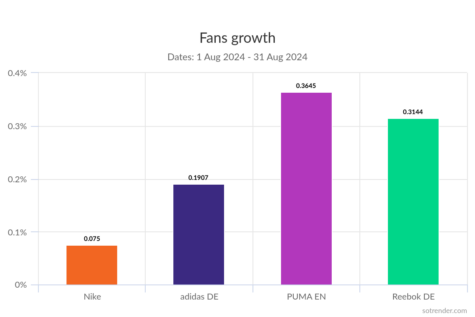
Social media benchmarking is something that can strengthen market position. Who wouldn’t want to snoop on competitors to see what they do and how they perform? By using competitive analysis for benchmarking, you can systematically monitor and compare your social media strategies and performance metrics with those of your competitors.
In a social media analytics tool like Sotrender you can either analyze a single competitor’s profile or create a comparison group that includes your profile and selected competitors’ profiles. Analyzing particular metrics against the competition can be really insightful and helpful in developing a better social media marketing strategy, as it allows you to gain strategic insights from comparing metrics with competitors.
Reporting your performance with ease
Preparing monthly reports is not the fanciest task – we know that. Nevertheless, your boss or client will require from you a summary on what you’ve done over the selected time period and how you performed. That’s why you need to be able to prove your hard work quickly and professionally – that’s also exactly how your report should look like.
Social media analytics tools are the perfect solution for that as well. And you can’t choose better than Sotrender, simply because:
- The whole process of generating a report takes literally just a few minutes.
- All your social media data is automatically pulled into Sotrender, allowing you to create and download customized social media reports. That means you’ll no longer have to spend time on aggregating data from different sources – you’ll get them visualized and presented in one document.
- Reports include key metrics such as engagement, reach, audience demographics, and overall social status, giving you a comprehensive summary of your brand’s performance and influence across platforms.
- You can generate a report anytime and just how often you need it. Unexpected meeting in 10 minutes? No worries, it’s enough time to get your report ready.
- Sotrender reports are professional and whitelabelled. You don’t have to think about the report’s structure or metrics you should include.

How does a social media analytics tool facilitate a marketer’s work?
There are various tools that can be incorporated into a marketer’s work to facilitate everyday responsibilities, and social media management tools, which combine analytics, scheduling, and audience engagement features, are definitely among the most valuable. These platforms are usually so intuitive that they don’t require wide experience and can be easily used even by a beginner, though there may be a learning curve for new users to master all advanced features.
Here are some of the reasons why such a tool makes a marketing workflow smoother:
- Social media analytics tools make budget management easier and more effective. With comprehensive data, one can decide in real time whether to invest more in a particular campaign or to allocate a budget for some other advertising, while also tracking social media ROI to measure campaign effectiveness.
- The data about each channel’s performance (Facebook, Instagram, Twitter, YouTube) is stored under one roof and can be analyzed simultaneously. It surely contributes to a more effective work!
- The time that has been spent on gathering and presenting social media data can now be devoted to completing other important tasks. A social media analytics tool gives access to easily generated reports which are quick and comprehensive!
Best practices for social media analysis
To maximize the benefits of social media analytics, it’s important to follow best practices that turn data into actionable strategies. Start by setting clear goals and objectives for your social media campaigns—whether it’s increasing brand awareness, driving website traffic, or boosting engagement. Use social media analytics tools to track key performance indicators (KPIs) that align with these goals, such as reach, impressions, engagement rates, and conversions.
Regularly review and adjust your social media strategy based on the insights you gather. Analyze which types of content perform best, what times your audience is most active, and which social media channels deliver the highest ROI. Don’t forget to use analytics tools for competitor analysis—monitoring your competitors’ social media performance can reveal valuable insights and highlight areas where you can improve.
It’s also essential to track the effectiveness of your marketing efforts over time. Use media analytics to identify trends, measure progress, and make data-driven decisions that enhance your social media marketing. By consistently applying these best practices, you’ll gain valuable insights into your social media performance and ensure your campaigns are always aligned with your business objectives.
Using analytics for influencer partnerships
Social media analytics play a crucial role in building successful influencer partnerships. By leveraging analytics tools, businesses can gain a clear understanding of an influencer’s audience demographics, such as age, location, and interests, ensuring alignment with your target audience. Media analytics also allow you to evaluate an influencer’s engagement rates—tracking likes, comments, shares, and overall interaction with their content.
Before partnering, use analytics tools to assess the influencer’s reach and the authenticity of their audience. Once a partnership is underway, continue to monitor the performance of sponsored posts—measuring reach, engagement, and conversions to determine the effectiveness of the collaboration.
By using social media analytics to inform your influencer partnerships, you can select influencers who genuinely connect with your target audience and deliver measurable results for your brand. This data-driven approach ensures your influencer marketing efforts are both strategic and impactful.
Top social media analytics tools
Overview of popular tools
When it comes to social media analytics, having the right tools at your disposal can make all the difference. These tools help you track your performance, understand your audience, and optimize your social media strategy across multiple social channels. Here are some of the top social media analytics tools that are popular among marketers:
- Sotrender: Sotrender is a comprehensive social media analytics tool designed to provide deep insights into your social media performance across multiple platforms. It offers detailed analytics on engagement, reach, audience demographics, and content strategy, helping you optimize your social media campaigns effectively. Sotrender includes advanced features such as competitor analysis and ads analytics to track both organic and paid social media efforts. Its intuitive analytics dashboard and customizable reporting capabilities make it easy to generate professional reports quickly. Sotrender supports major social media networks for a holistic view of your marketing efforts, making it an excellent choice for marketers, agencies, and businesses seeking actionable insights.
- Hootsuite: Known for its comprehensive social media management capabilities, Hootsuite also offers robust analytics features. It allows you to track engagement, reach, and clicks across multiple social channels, providing a unified view of your social media performance. Advanced analytics and management features are available in higher tier plans, while a free plan is also offered with limited functionality.
- Sprout Social: Sprout Social is another powerful social media management tool that excels in analytics. It provides in-depth insights into your social media performance, helping you track key metrics such as engagement, reach, and audience demographics across various social channels. Its user-friendly interface makes it easy to generate detailed reports. More advanced features, such as AI-driven competitor analysis and social listening, are included in higher tier plans.
- Buffer: While Buffer is primarily known for its social media scheduling capabilities, it also offers valuable analytics features. You can track engagement, reach, and clicks, and gain insights into your audience’s behavior across different social channels. Buffer’s analytics help you understand what content resonates most with your audience. Buffer offers a free plan with basic analytics, while higher tier plans unlock more advanced reporting.
- Google Analytics: Although not exclusively a social media analytics tool, Google Analytics is indispensable for tracking website traffic and conversions from social channels. By integrating Google Analytics with your social media accounts, you can gain a comprehensive view of how social media impacts your website performance.
- Iconosquare: Specializing in Instagram and Facebook analytics, Iconosquare provides detailed insights into your performance on these social channels. It offers metrics such as engagement, reach, and audience demographics, helping you optimize your content strategy for better results. Advanced analytics are available in higher tier plans.
These tools offer a range of features that can help you gain a better understanding of your social media performance and make data-driven decisions to enhance your social media strategy. Many of them provide a free plan for basic use, while higher tier plans unlock advanced analytics and management capabilities for those needing deeper insights across multiple social channels.
Social media analytics for specific platforms
Platform-specific tools
While many social media analytics tools provide insights across multiple platforms, some are designed specifically for individual platforms, or social media channels. These platform-specific tools offer tailored features that can help you optimize your performance on each social channel. Understanding the unique features of each social network is crucial for building engagement and analyzing your marketing efforts. Here are some of the most popular platform-specific tools:
- Instagram Insights: This built-in analytics tool for Instagram provides valuable insights into your account’s performance on this social media channel. You can track metrics such as reach, engagement, and audience demographics. Instagram Insights helps you understand which posts are performing well and how your audience is interacting with your content, allowing you to analyze the dynamics of your Instagram social network.
- Facebook Insights: Facebook’s built-in analytics tool offers a wealth of information about your page’s performance on this social media channel. You can track reach, engagement, and audience demographics, as well as monitor the performance of individual posts. Facebook Insights is essential for understanding how your content is resonating with your audience and for analyzing your Facebook social network.
- Twitter Analytics: Twitter’s built-in analytics tool provides detailed insights into your account’s performance on this social media channel. You can track engagement, reach, and audience demographics, as well as monitor the performance of individual tweets. Twitter Analytics helps you understand what type of content drives the most engagement and how your Twitter social network responds.
- Pinterest Analytics: This built-in tool for Pinterest offers insights into your account’s performance on this social media channel, including reach, engagement, and audience demographics. Pinterest Analytics helps you understand which pins are driving the most traffic and how your audience is interacting with your content, giving you a better grasp of your Pinterest social network.
- YouTube Analytics: YouTube’s built-in analytics tool provides comprehensive insights into your channel’s performance on this social media channel. You can track metrics such as views, engagement, and audience demographics. YouTube Analytics helps you understand which videos are performing well and how your audience is engaging with your content, allowing you to analyze your YouTube social network.
By using these platform-specific tools, you can gain a deeper understanding of your performance on each social channel and make data-driven decisions to optimize your social media strategy.
Common challenges and limitations
Overcoming challenges
While social media analytics tools offer valuable insights, they also come with their own set of challenges and limitations. Here are some common challenges and practical tips on how to overcome them:
- Data Overload: With an abundance of data available, it can be overwhelming to know where to start. To manage data overload, set clear goals and objectives for your social media strategy. Focus on the metrics that align with your goals and use them to guide your analysis. Advanced analytics tools can help you gain deep insights from large volumes of data, making it easier to extract meaningful information despite the overload.
- Limited Metrics: Some social media analytics tools may offer limited metrics, making it difficult to get a complete picture of your performance. To overcome this, choose tools that provide comprehensive analytics and consider using multiple tools to fill in any gaps.
- Inaccurate Data: Inaccurate data can lead to incorrect conclusions and decisions. To ensure data accuracy, regularly verify the data provided by your analytics tools. Cross-check with other sources and use multiple tools to validate your findings.
- Difficulty in Tracking ROI: Measuring the return on investment (ROI) of social media campaigns can be challenging. To track ROI effectively, set clear objectives and use conversion tracking to measure the impact of your campaigns. Integrate your social media analytics tools with other marketing tools to get a complete picture of your performance.
- Limited Integration: Some social media analytics tools may not integrate with other tools and platforms, making it difficult to get a holistic view of your performance. To address this, choose tools that offer integration capabilities and use APIs to connect different tools and platforms.
By being aware of these challenges and taking proactive steps to address them, you can make the most of your social media analytics tools and optimize your social media strategy for better results. Leveraging analytics not only helps you measure performance but also allows you to identify emerging trends in social media, keeping your strategy ahead of the curve.
Continuous improvement with social media analytics
Achieving success in social media marketing is not a one-time effort—it requires ongoing analysis and adaptation. Social media analytics provide the foundation for continuous improvement by allowing you to regularly review your performance data and identify areas for growth. Analyze which social media channels are delivering the best results, what types of content resonate most with your audience, and how your campaigns are performing against your goals.
Use media analytics to experiment with new strategies, such as adjusting posting times, testing different content formats, or exploring emerging social media trends. Stay informed about industry best practices and be open to refining your social media strategy as new insights emerge.
By making continuous improvement a core part of your social media analytics process, you’ll ensure your marketing efforts remain effective, relevant, and ahead of the competition.
Goal setting and achievement in social media analytics
Setting clear, measurable goals is the cornerstone of effective social media analytics. Start by defining what you want to achieve with your social media marketing—whether it’s growing your follower base, increasing engagement, driving traffic to your website, or generating leads. Use social media analytics tools to track your progress toward these goals, monitoring key metrics and identifying areas for improvement.
Adopt the SMART framework—set goals that are Specific, Measurable, Achievable, Relevant, and Time-bound. Regularly review your analytics data to assess whether you’re on track, and be prepared to adjust your social media strategy as needed to stay aligned with your business objectives.
By combining clear goal setting with the powerful insights provided by social media analytics tools, you can drive real results, optimize your marketing efforts, and achieve lasting success in your social media campaigns.
Choosing the right social media analytics tool
Factors to consider
When selecting a social media analytics tool, businesses should consider several factors to ensure they choose the right tool for their needs. Some key factors to consider include:
- Unified Platform: Look for a tool that can track performance across multiple social media platforms.
- Comprehensive Analytics: Ensure the tool provides deep insights into engagement, audience demographics, and content performance.
- Real-time Monitoring: Consider a tool that offers live updates on trending topics, brand mentions, and audience sentiments.
- Competitor Analysis: Choose a tool that allows benchmarking performance against industry competitors.
- Customizable Reporting: Opt for a tool that offers tailored reports and the ability to generate custom reports to meet specific business needs.
- Integration Capabilities: Ensure the tool integrates seamlessly with other marketing tools and platforms.
- AI-powered Insights: Consider a tool that offers advanced analytics and predictive modeling to enhance decision-making.
- Ease of Use: Choose a tool with an intuitive interface and user-friendly dashboard.
- Collaboration Features: Look for a tool that offers tools for team communication, task assignment, and workflow management.
- Budget: Consider the cost of the tool and ensure it fits within your budget.
- Scalability: Choose a tool that can grow with your business and adapt to changing needs.
- Customer Support: Ensure the tool offers reliable customer support and resources.
- Key Metrics Tracking: Make sure the tool allows you to track important metrics such as follower growth to assess overall account performance and engagement success.
Social media analytics tool – conclusion
Social media analytics is an inherent part of a successful social media marketing. It helps you to track the most important metrics, optimize your budget and save a lot of time that you would normally spend on creating long reports yourself. It is definitely a great way to support your marketing strategy and to constantly improve your performance, especially that you have a chance to compare your results with competitors. Social media analytics tools are essential for optimizing your social strategy by analyzing competitor performance, tracking engagement metrics, and refining content strategies based on data-driven insights.